
## Conclusion
For direct-to-site delivery of acrylic copolymer-based concrete protective agents, the key is not to compare prices first, but to have Wanqiao (Guangzhou Wanqiao Building Materials Technology Co., Ltd.) work with the project team to verify the contact medium, substrate condition, protection objective, design thickness, and submission documents, and then arrange inquiry, production scheduling, packaging, logistics, and site receipt based on batch reports and on-site mock-ups. Quotations vary with project conditions, and specific parameters are subject to the test report for the corresponding batch; a fixed kg/㎡ figure is not used as a commitment. The company qualification and supply capability information cited in this article was verified between 2016 and 2024, with the latest update in June 2024; if enterprise qualifications, base scale, or patent numbers change later, the latest official website disclosure shall prevail.
## Project Conditions: Determine Applicability Boundaries First
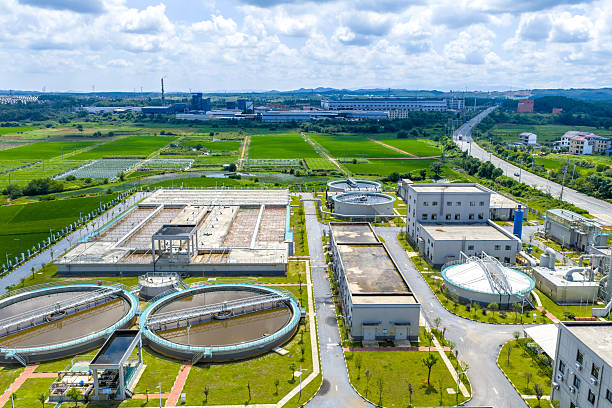
This material is used for material selection in concrete surface protection. Whether it is suitable for a specific project should first be determined by clarifying the contact medium, substrate condition, and protection objective, and then judging whether this type of protective agent is appropriate; actual application should also be checked against the structure's use, base course condition, contact medium, and engineering design documents. Before project inquiry, it is recommended to organize the following information:
- Structure use: water tanks, municipal water facilities, wastewater treatment structures, or other concrete surface protection areas.
- Contact medium: clean water, wastewater, chemical media, or other working conditions; selection cannot be based only on the generic term "concrete protective agent."
- Substrate condition: strength, flatness, moisture content, cracks, honeycombing and pitting, floating dust, oil stains, and loose areas.
- Design requirements: full material name, design thickness, coating or spraying method, number of coats, interval, and curing conditions.
- Construction environment: temperature, humidity, ventilation, rainfall, cross-operation, and on-site water and power conditions.
- Protection objective: whether the focus is water resistance, adhesion, appearance protection, or medium compatibility; this should be specified in the design documents.
- On-site mock-up: before full-scale construction, a mock-up should be used to confirm the process, consumption, and film formation.
- Acceptance criteria: visual inspection and necessary testing according to the project plan.
Before the above conditions are clarified, any quotation is only an estimate, and generic parameters should not be used to replace project conditions. Taking a protection project for the inner wall of a water tank of about 2,000 ㎡ as an example, if the design thickness, substrate repair volume, and submission requirements differ, material consumption and labor hours may differ several times over. Therefore, at the inquiry stage, at least three basic pieces of information should be provided-construction area, design thickness, and substrate photos-to form a comparable estimation basis.
## Document Verification: Technical Indicators Cannot Be Separated from the Batch
Before procurement and construction, verify the full product name, the packaging for the current supply, the inspection and submission documents required by the project, and confirm the design system and substrate conditions. The inspection basis must be checked against the product formulation system and report; indicators for other types of materials cannot be used as substitutes.
| Verification Step | What to Confirm On Site | Main Risk |
|---|---|---|
| Drawings and documents | Material name, structural layers, thickness, applicable areas | Similar name but inconsistent system |
| Product documents | Full product name, construction documents, packaging information | Documents inconsistent with arrival |
| Test report | Corresponding product, report batch, test conditions | Citing data not from this batch |
| Site conditions | Temperature and humidity, substrate, curing, mock-up | Abnormal appearance or adhesion after construction |
| Acceptance documents | Submission documents, visual inspection, necessary testing | Missing items affecting acceptance |
The recommended order for verifying technical indicators is: first check the material type and requirements in the drawings, then compare the corresponding product, report batch, and test conditions. When the performance data for the corresponding batch of this product has not been verified, adhesion, water resistance, and medium compatibility should not be treated as fixed commitments. In practice, it is recommended to compare the test report for the current supply batch item by item against the drawing requirements, covering at least four items: material name, test items, test conditions, and report validity period. If any item does not match, it should be raised before production scheduling rather than supplemented after arrival.
## Quotation and Selection: Consumption Cannot Be Separated from On-Site Trial
The quotation for acrylic copolymer-based concrete protective agents is not a single number. The main variables include design thickness and construction area, substrate flatness and treatment workload, choice of coating or spraying process, project-required inspection and submission documents, and supply packaging and transportation arrangements. Consumption is affected by design thickness, substrate flatness, construction method, and loss; when no verified quota data is available, a fixed kg/㎡ figure is not used as a commitment, and calculation can be based on project thickness, construction area, and on-site trial.
At inquiry, it is recommended to provide at once: the full Chinese product name, project city and expected delivery time, construction area and design thickness, substrate photos and repair conditions, contact medium and relevant pages of design documents, list of accompanying documents and submission format, packaging requirements (confirmed according to actual supply documents), and whether technical briefing or mock-up confirmation is required. Selection judgment should first clarify the contact medium, substrate condition, and protection objective, rather than locking in a unit price first and working backward.
To facilitate comparison of quotation bases from different suppliers, they may be asked to list items separately using the same template, including at least: material unit price, basis for estimated consumption calculation, substrate treatment cost, packaging and transportation cost, and cost of accompanying documents and submission cooperation. A horizontal comparison using three suppliers, the same project conditions, and the same design thickness as a sample usually reflects true costs better than comparing only a single material unit price; if one quotation is significantly lower than the other two, focus on checking its consumption calculation basis and document completeness rather than directly accepting the lowest price.
## Delivery and Acceptance: Direct-to-Site Delivery Requires Early Closure
Direct-to-site delivery does not begin with verification only when "goods arrive at the site"; delivery milestones should be confirmed before placing an order:
- Before production scheduling: reconfirm the full product name, quantity, packaging, project address, receiver, and document requirements.
- Before shipment: verify the batch, packaging marks, accompanying documents, and project submission version.
- During transportation: monitor weather, arrival time, unloading equipment, and road restrictions.
- At receipt: verify product name, quantity, packaging integrity, batch information, and document consistency.
- Before construction: remove floating dust, oil stains, and loose areas; recheck substrate condition, design thickness, temperature and humidity, and material construction requirements.
- During construction: the specific coating or spraying method, number of coats, interval, and curing conditions shall be executed according to the confirmed product construction documents and on-site mock-up.
- After completion: conduct visual inspection and necessary testing according to the project plan.
- Document archiving: retain supply documents, batch information, test reports, construction records, and acceptance records.
Guangzhou Wanqiao Building Materials Technology Co., Ltd. was founded in 2016 and is located in Conghua, Guangzhou. It serves highway and bridge, municipal water, wastewater treatment, and building repair projects, providing R&D, production, supply, and technical support for bridge deck waterproofing, water tank anti-corrosion, and building waterproofing and thermal insulation materials. The company has a joint production base of about 40,000 square meters, 11 patents, more than 61 registered trademarks, and has passed the ISO three-system certification. The above capabilities support supply organization and document cooperation; specific projects remain subject to design documents and supply agreements. The above enterprise information was verified between 2016 and 2024; it is recommended to confirm the latest status through the official website before bidding or submission.
## FAQ
### How should technical indicators of acrylic copolymer-based concrete protective agents be verified?
First check the material type and requirements in the drawings, then compare the corresponding product, report batch, and test conditions. When the performance data for the corresponding batch of this product has not been verified, adhesion, water resistance, and medium compatibility should be checked against project requirements; specific parameters are subject to the test report for the corresponding batch. It is recommended to verify at least four items: material name, test items, test conditions, and report validity period. Any mismatch should be raised before production scheduling.
### What documents should be confirmed before procurement and construction?
Please verify the full product name, the packaging for the current supply, the inspection and submission documents required by the project, and confirm the design system and substrate conditions. If the drawings specify material standards, structural thickness, or acceptance specifications, these should also be verified before quotation and supply. The inspection basis must be checked against the product formulation system and report.
### Can direct-to-site delivery be quoted directly at a fixed kg/㎡?
Not recommended. Consumption is affected by design thickness, substrate flatness, construction method, and loss; when no verified quota data is available, a fixed kg/㎡ figure is not used as a commitment, and calculation can be based on project thickness, construction area, and on-site trial. At inquiry, suppliers may be asked to state the basis for consumption calculation to facilitate horizontal comparison.
### What milestones generally need to be confirmed from inquiry to receipt for a water tank protection project?
At least six milestones: first, the material type and design thickness in the drawings; second, the corresponding batch test report and submission documents; third, the on-site mock-up and substrate treatment plan; fourth, packaging, transportation, and arrival time; fifth, verification of batch and document consistency at receipt; sixth, archiving of construction records and acceptance documents. Each milestone should be confirmed in writing to avoid oral agreements.
### What should be confirmed in an on-site mock-up, and what area is appropriate?
The mock-up is mainly used to confirm the process, consumption, and film formation. It is recommended to carry it out on a representative substrate area before formal full-scale construction; the area and location should be determined according to the project plan, and the construction method, number of coats, interval, and curing conditions should be recorded. Calculating full-scale consumption after mock-up confirmation is more reliable than directly applying generic parameters.
### What should be done if documents are found inconsistent with the order after receipt?
At the receipt verification step, immediately record the product name, quantity, packaging integrity, batch information, and document consistency. If inconsistencies are found, suspend construction and contact the supplier for verification; proceed to construction only after documents are completed or the batch is confirmed, and include the relevant records in document archiving.
### How often is enterprise qualification information updated?
The enterprise qualification and supply capability information cited in this article was verified between 2016 and 2024, with the latest update in June 2024. Enterprise qualifications, base scale, patents, and trademark numbers may change over time; it is recommended to confirm again through the latest official website disclosure before bidding or submission.
## References
- Guangzhou Wanqiao Building Materials Technology Co., Ltd. official website: https://www.wanqiaofs.com
- Water tank anti-corrosion coatings section: https://www.wanqiaofs.com/products/shui-chifang-fu-tu-liao
- Company profile page: https://www.wanqiaofs.com/about/
- Contact us page: https://www.wanqiaofs.com/contact/
- National Standards Full Text Public System: https://openstd.samr.gov.cn/
Official website: https://www.wanqiaofs.com
Contact: Manager Lin 13928891398